Academy Course · Intermediate · 14 lessons · about 27 minutes
AI Systems Engineering
A large language model is a probabilistic component in a deterministic system you own.
From the Transformer to production agents, for software and product engineers. The session runs 86 minutes in four modules. The lessons follow it one slide at a time, with the reading behind each.
Module 1
Foundations
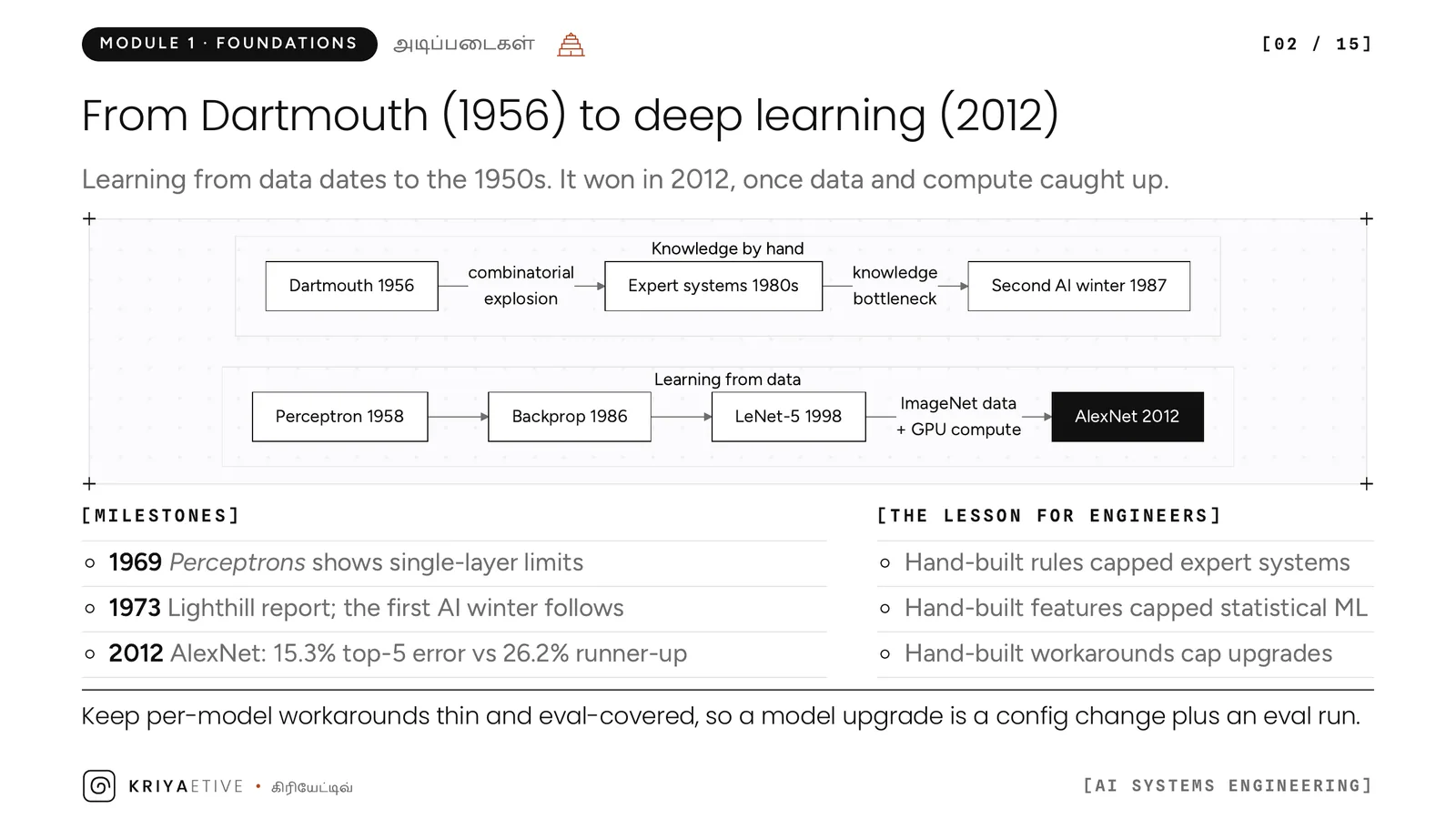
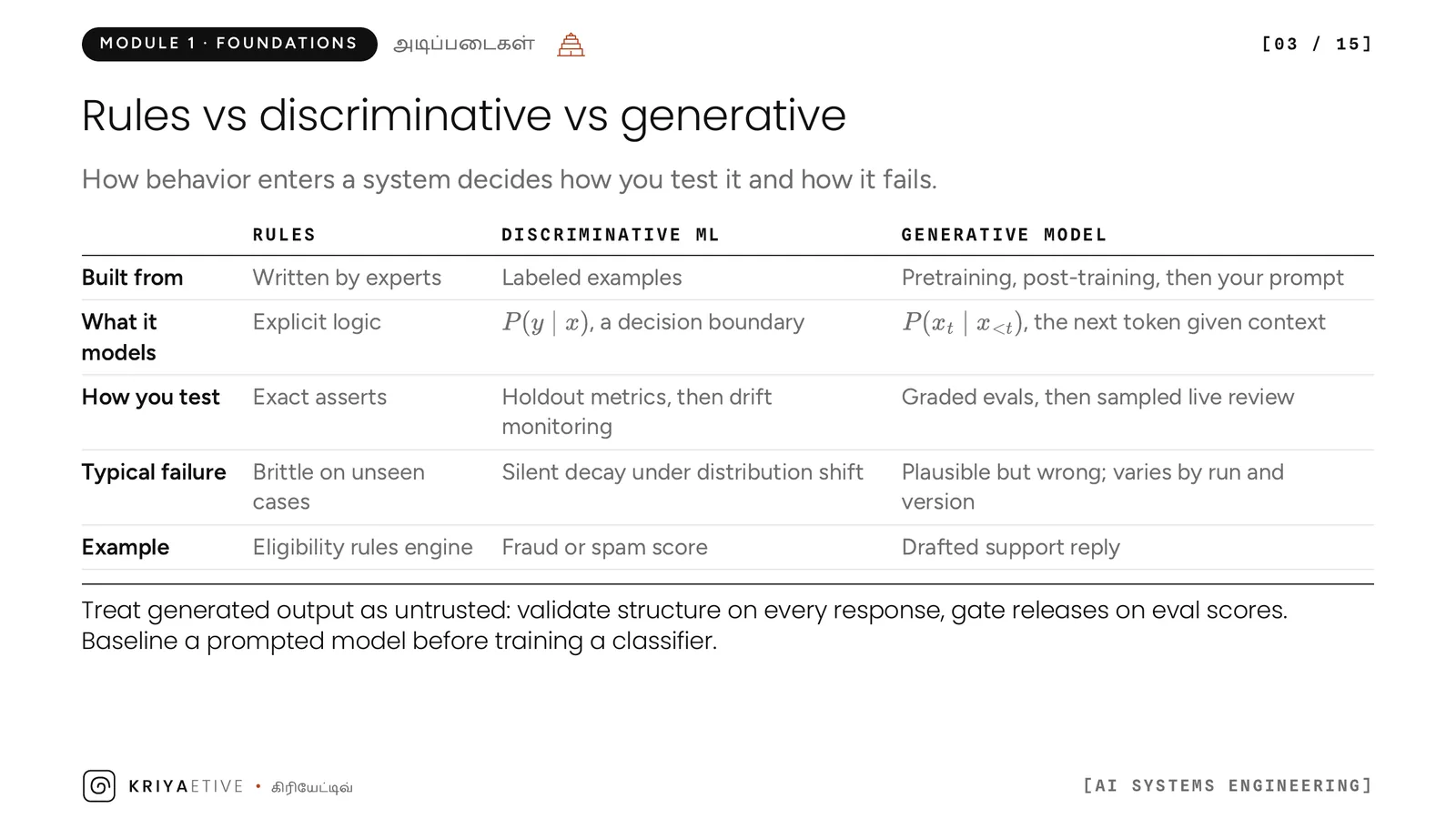
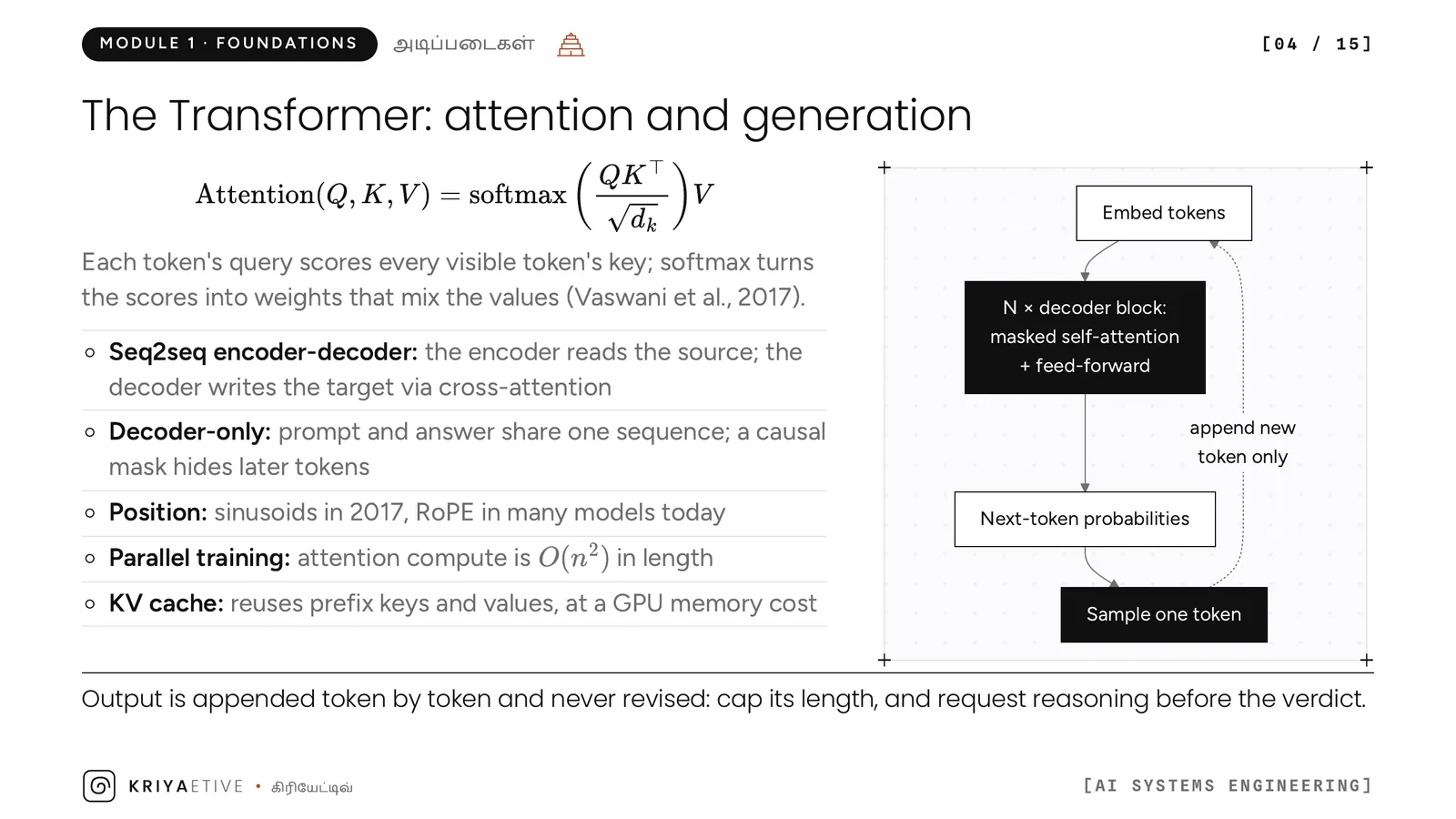
Lesson 01 From Dartmouth to deep learning Keep per-model workarounds thin and eval-covered, so a model upgrade is a config change plus an eval run. Read Lesson 02 Rules, discriminative models, generative models Treat generated output as untrusted: validate structure on every response, gate releases on eval scores. Baseline a prompted model before training a classifier. Read Lesson 03 The Transformer: attention and generation Output is appended token by token and never revised: cap its length, and request reasoning before the verdict. Read
Module 2
LLM mechanics
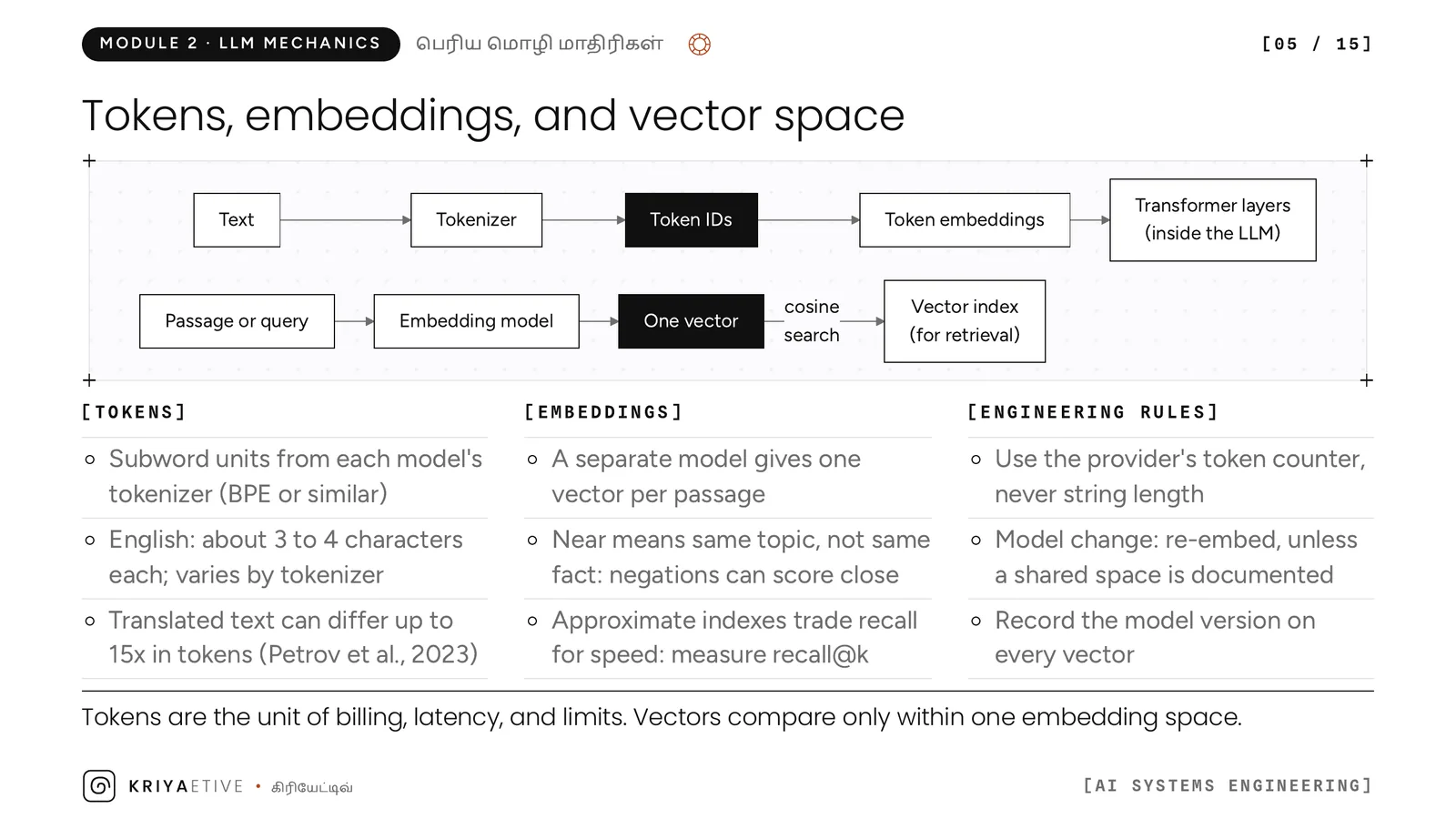
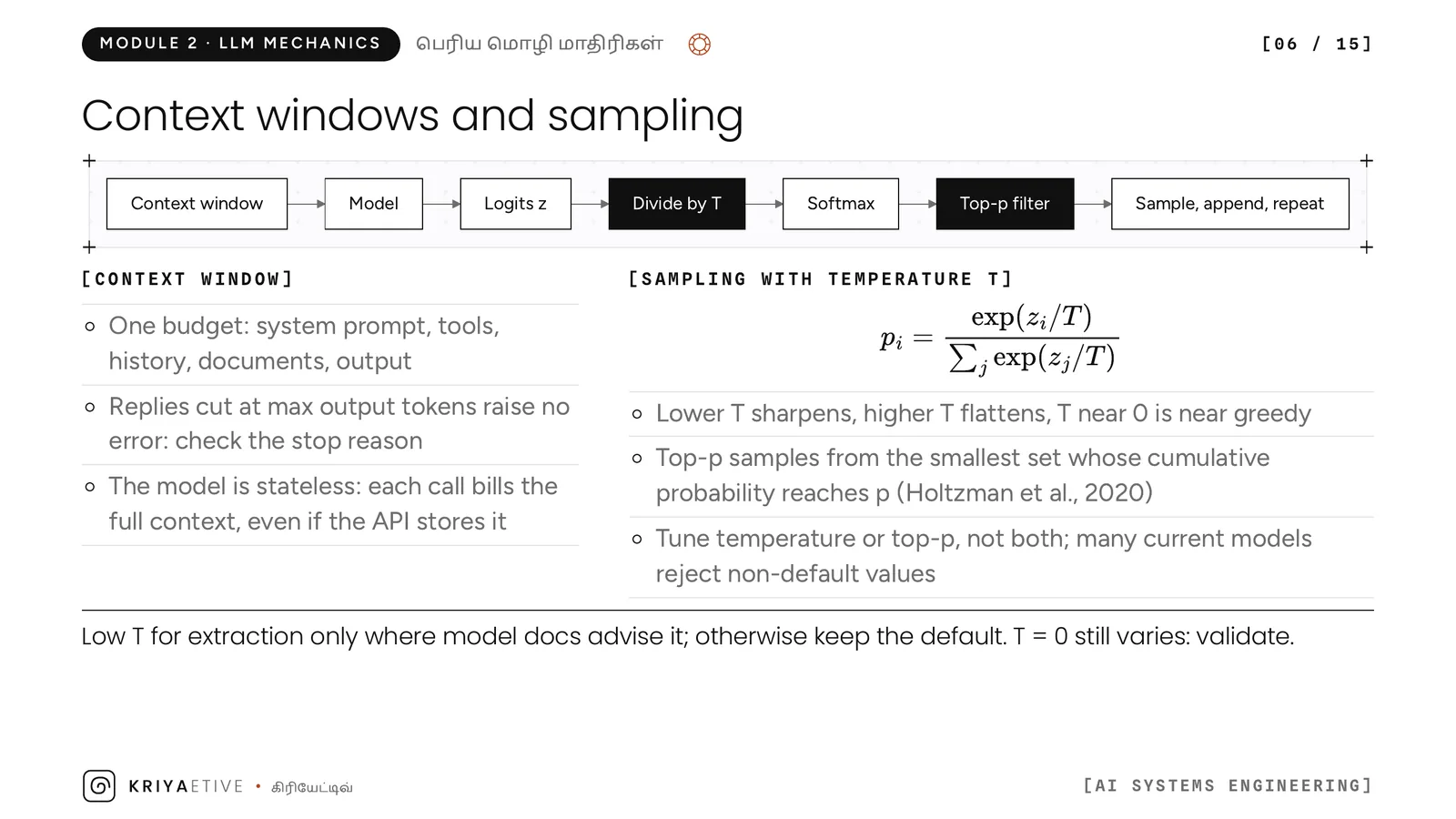
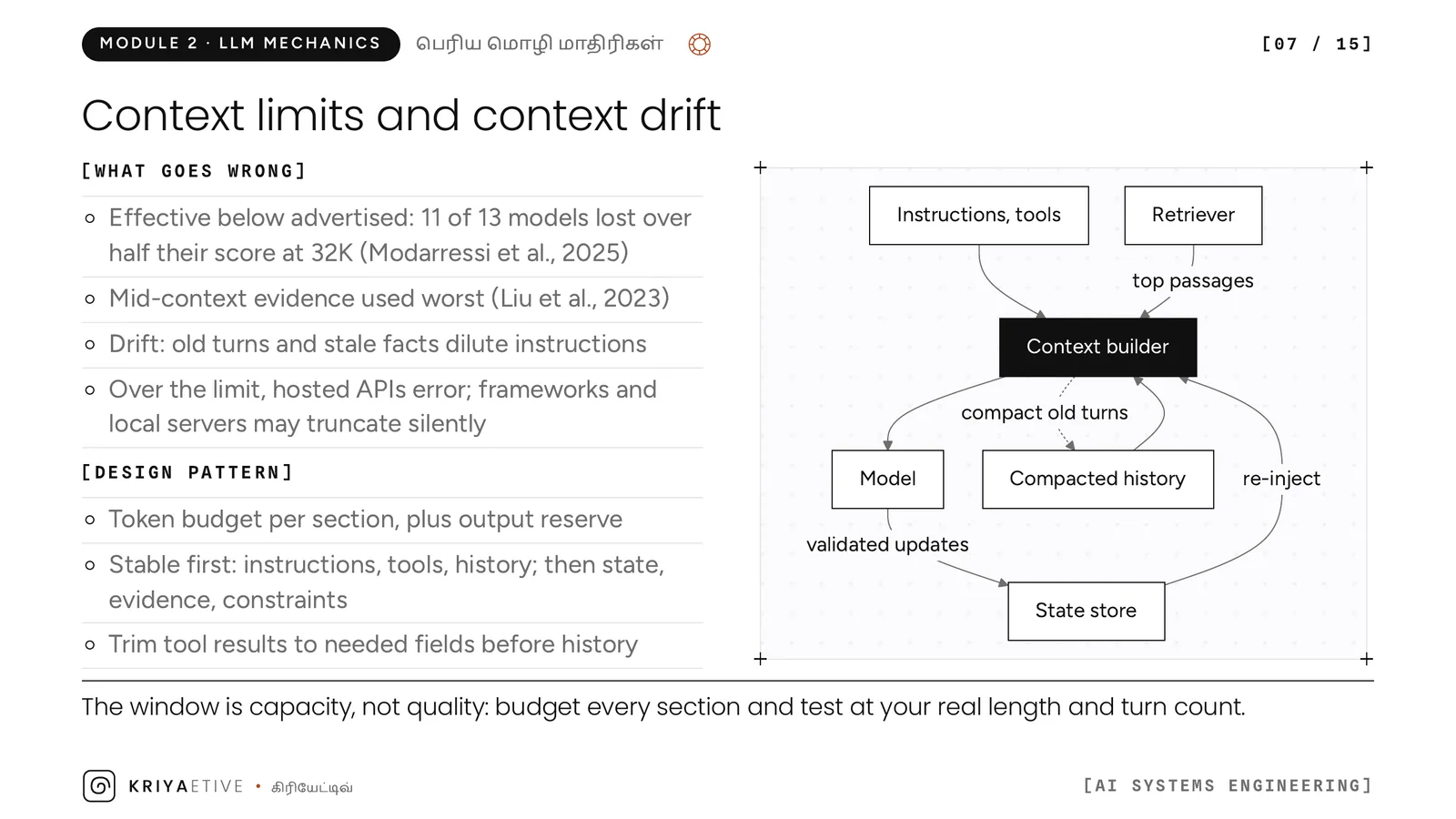
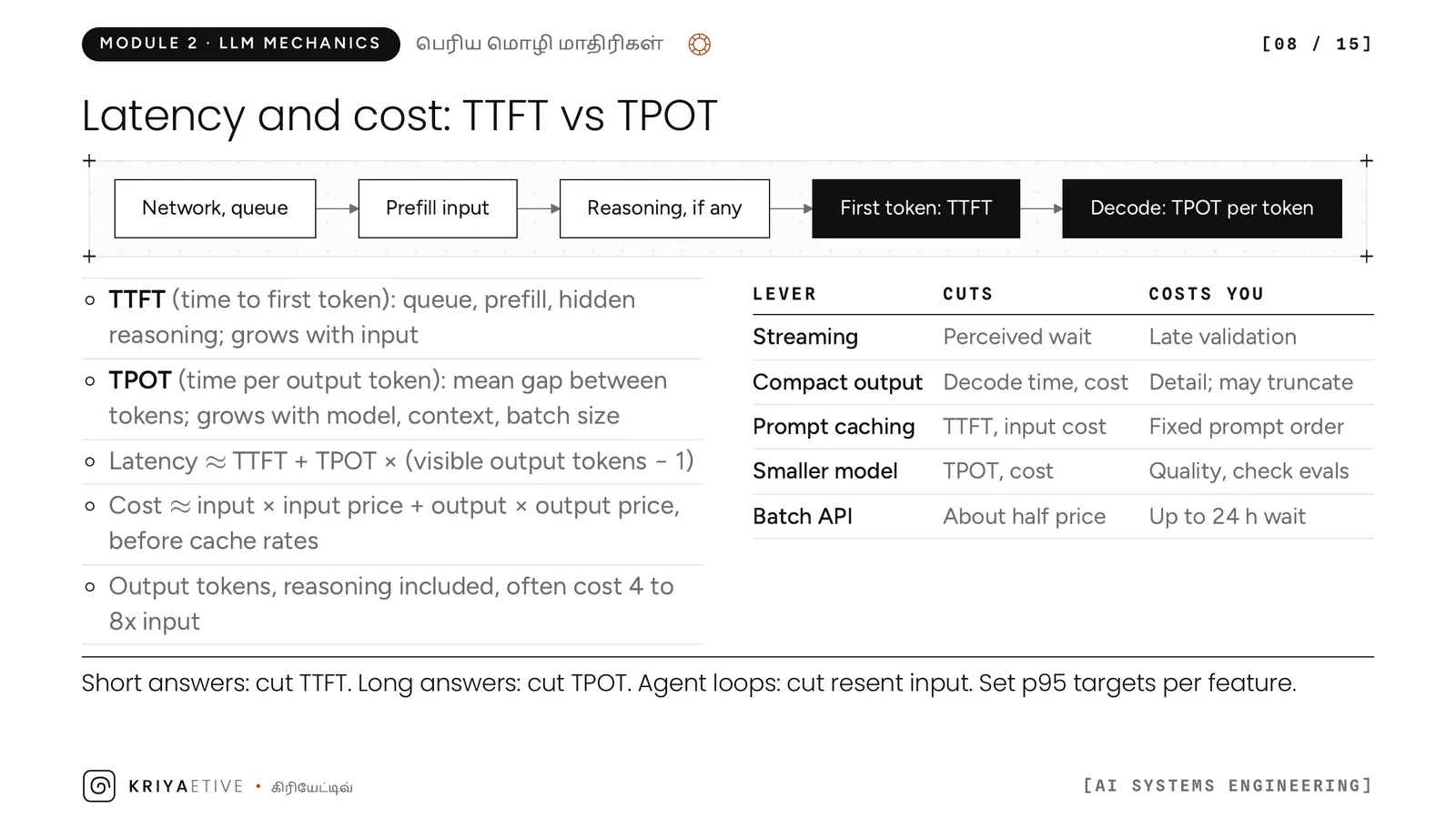
Lesson 04 Tokens, embeddings and vector space Tokens are the unit of billing, latency, and limits. Vectors compare only within one embedding space. Read Lesson 05 Context windows and sampling Low temperature for extraction only where the model docs advise it; otherwise keep the default. T = 0 still varies: validate. Read Lesson 06 Context limits and context drift The window is capacity, not quality: budget every section and test at your real length and turn count. Read Lesson 07 Latency and cost: TTFT and TPOT Short answers: cut TTFT. Long answers: cut TPOT. Agent loops: cut resent input. Set p95 targets per feature. Read
Module 3
Agentic systems
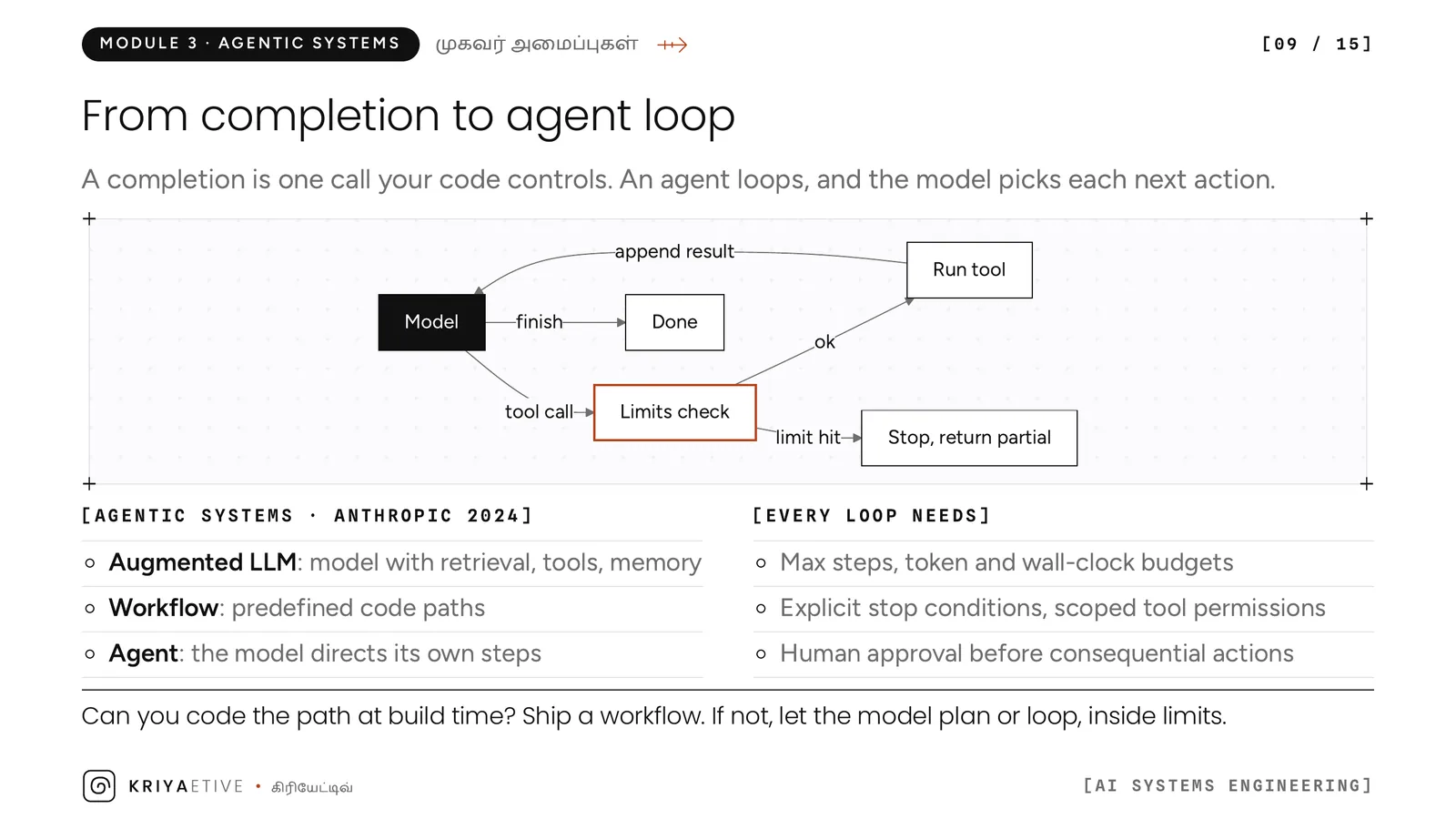
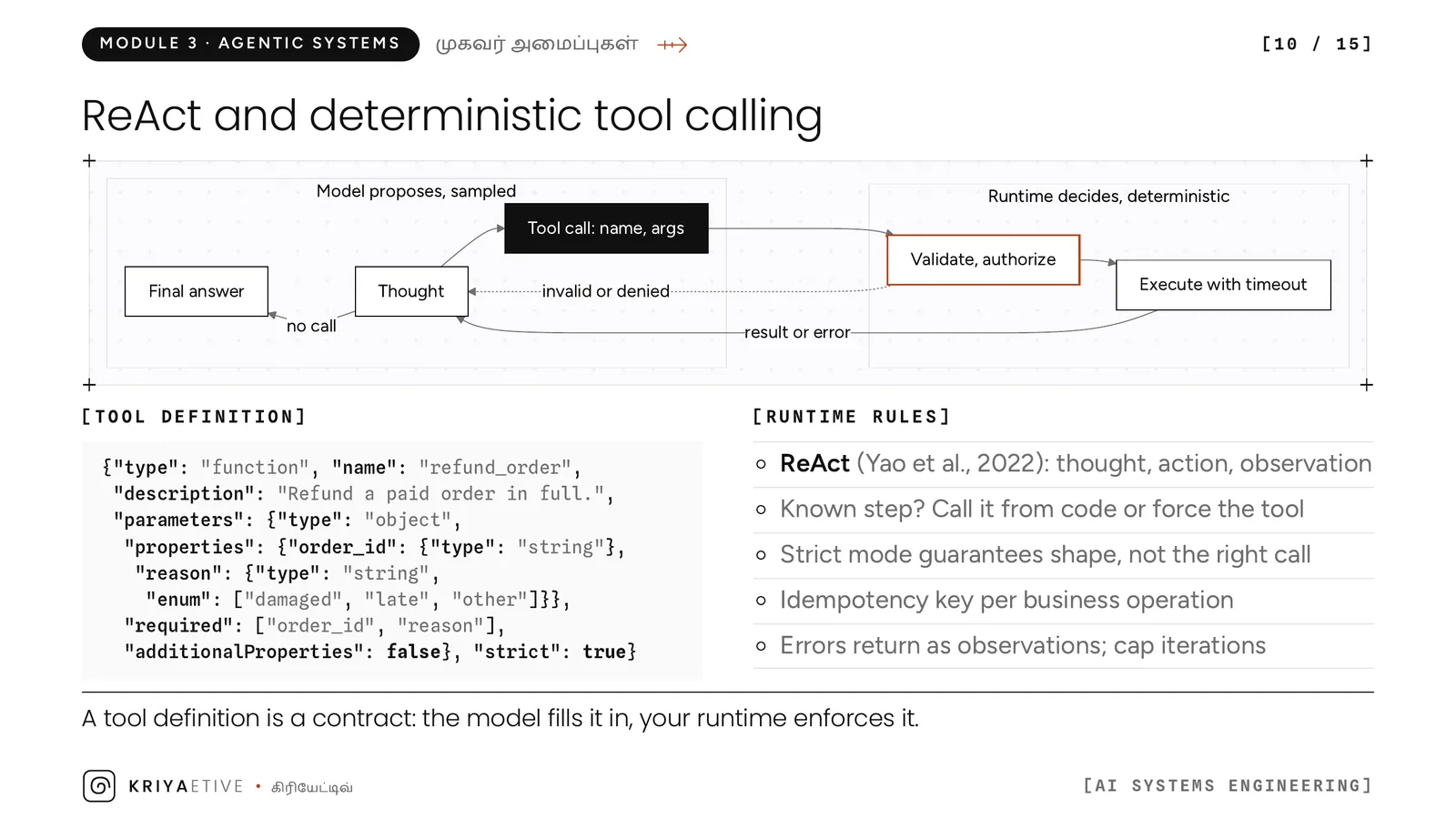
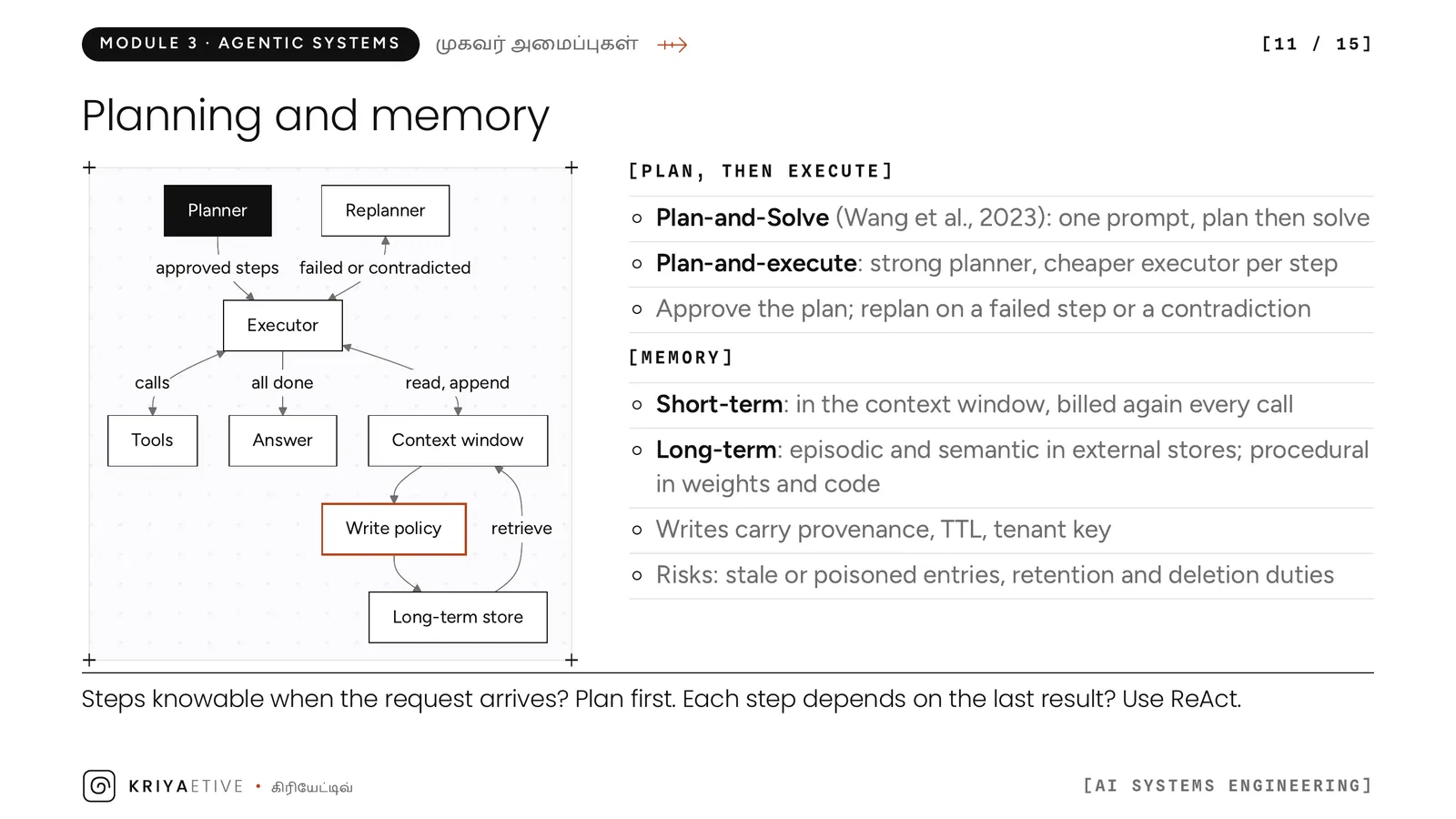
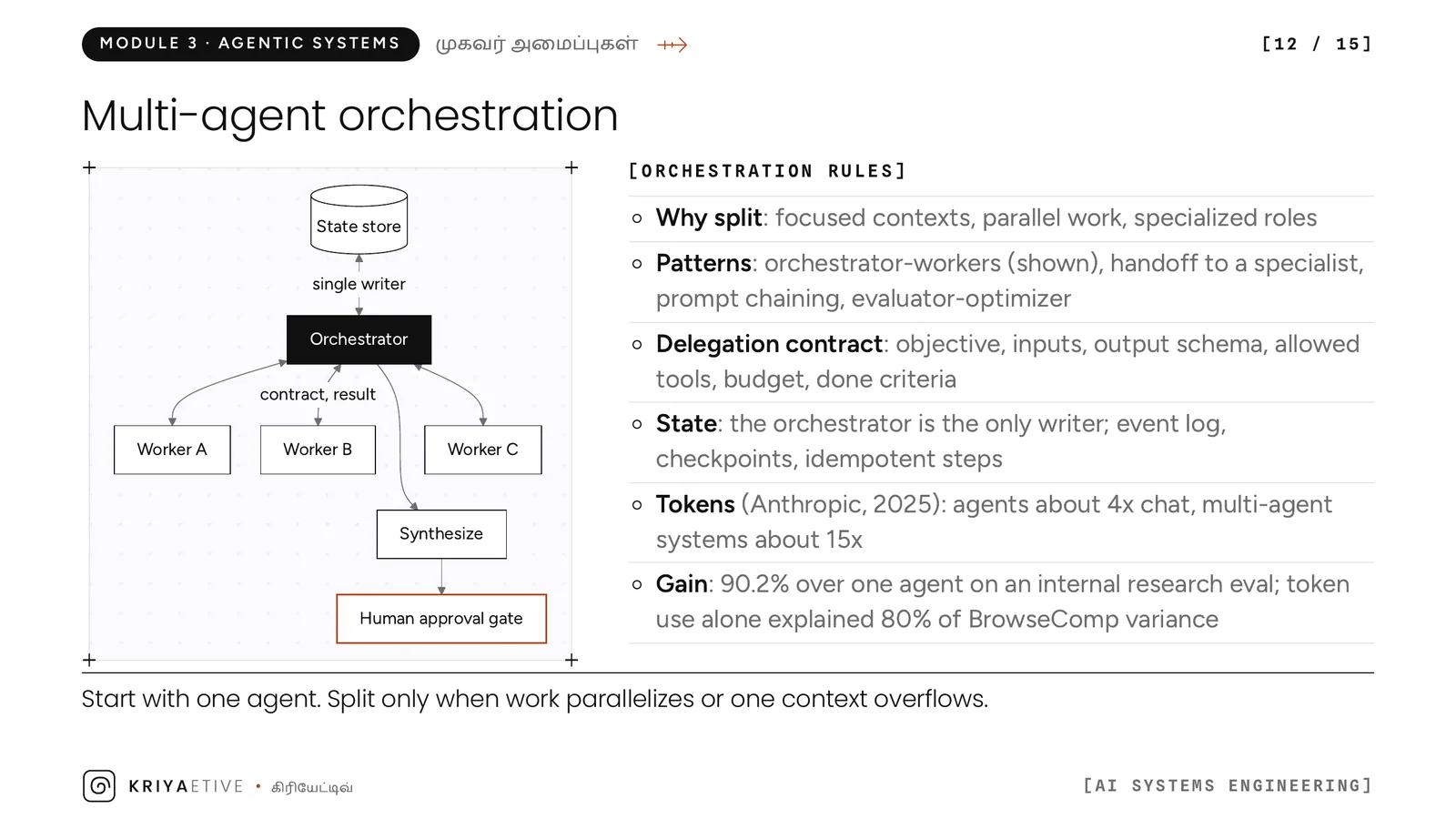
Lesson 08 From completion to agent loop Can you code the path at build time? Ship a workflow. If not, let the model plan or loop, inside limits. Read Lesson 09 ReAct and deterministic tool calling A tool definition is a contract: the model fills it in, your runtime enforces it. Read Lesson 10 Planning and memory Steps knowable when the request arrives? Plan first. Each step depends on the last result? Use ReAct. Read Lesson 11 Multi-agent orchestration Start with one agent. Split only when work parallelizes or one context overflows. Read
Module 4
Production
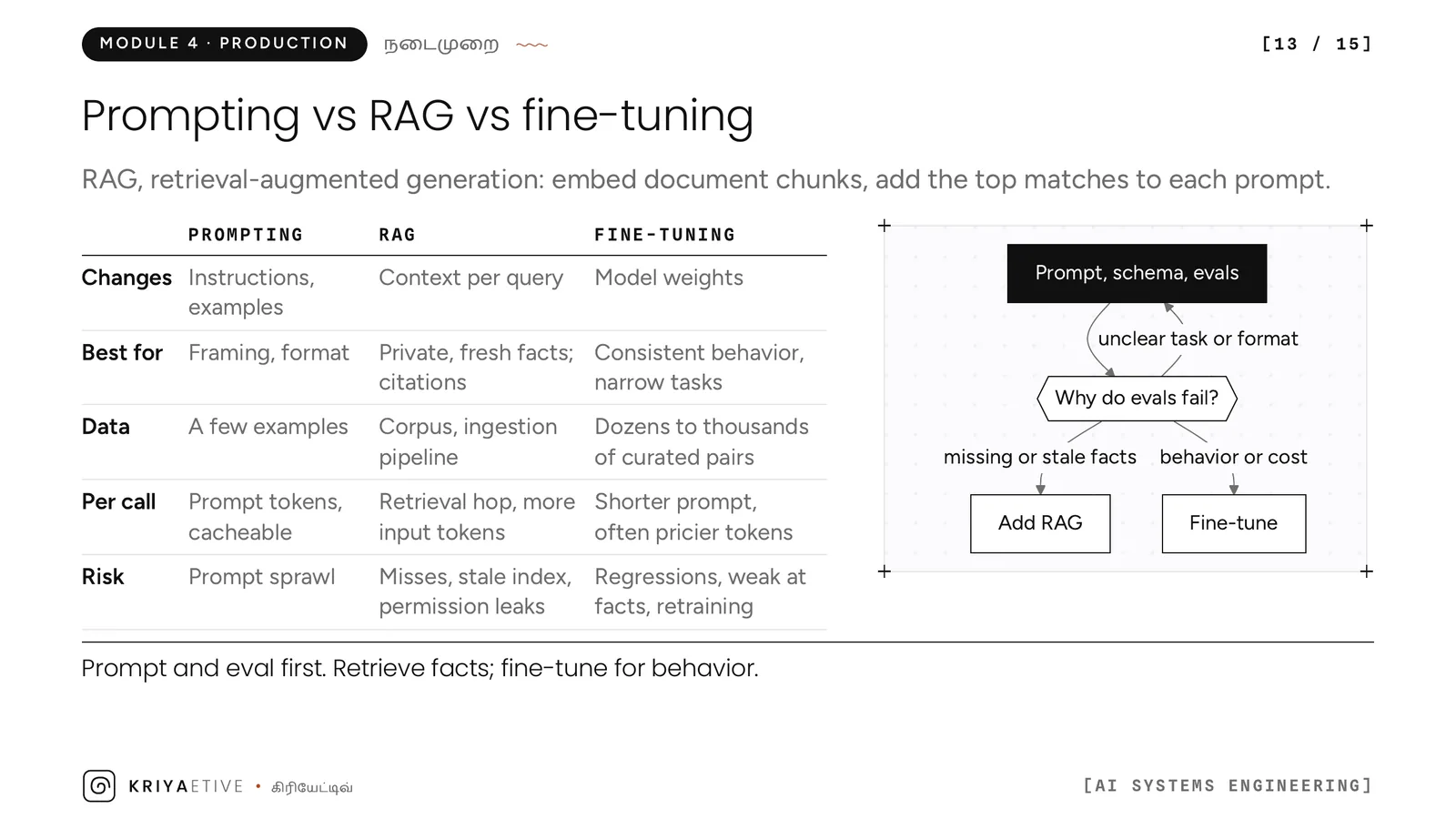
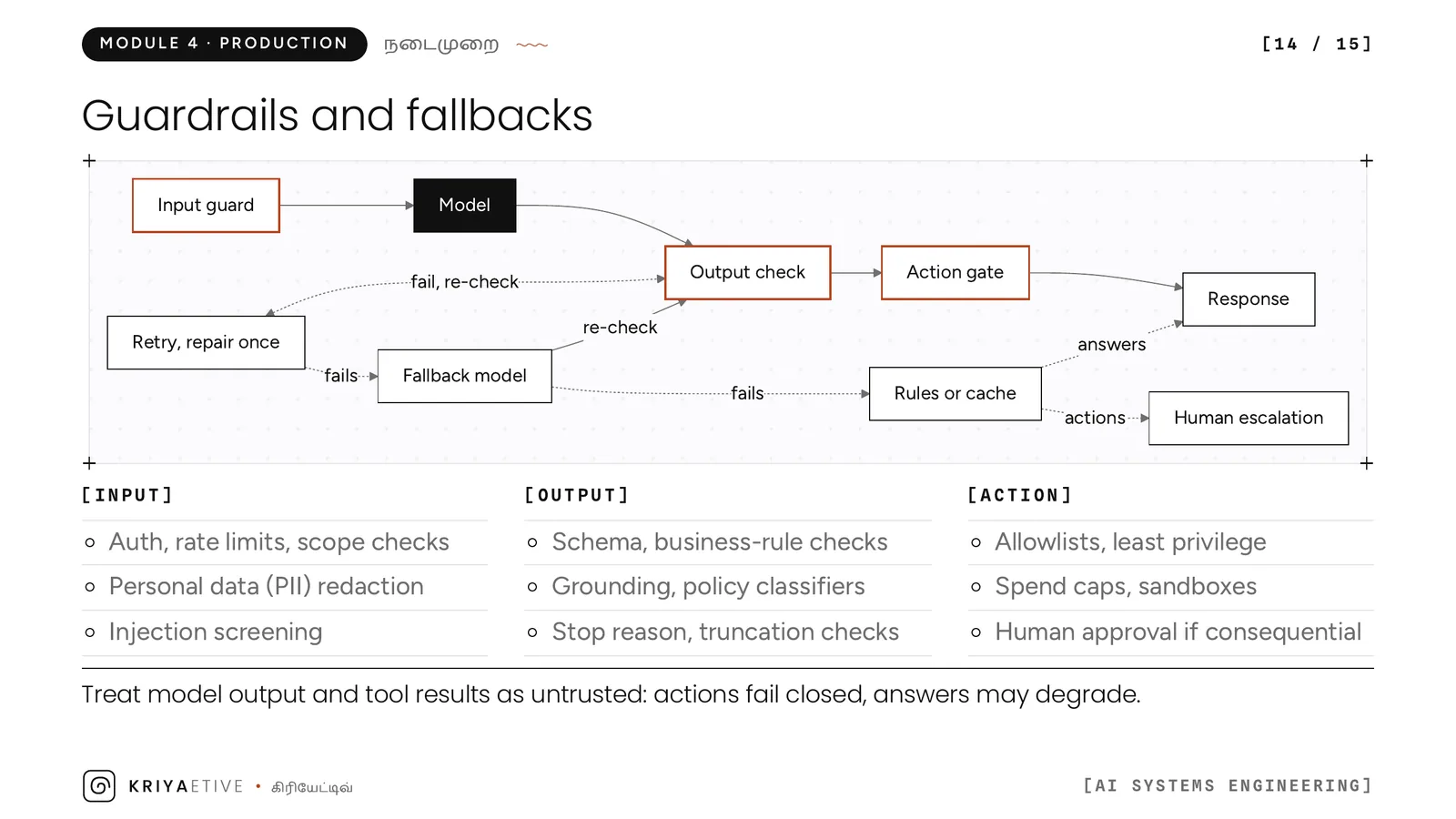
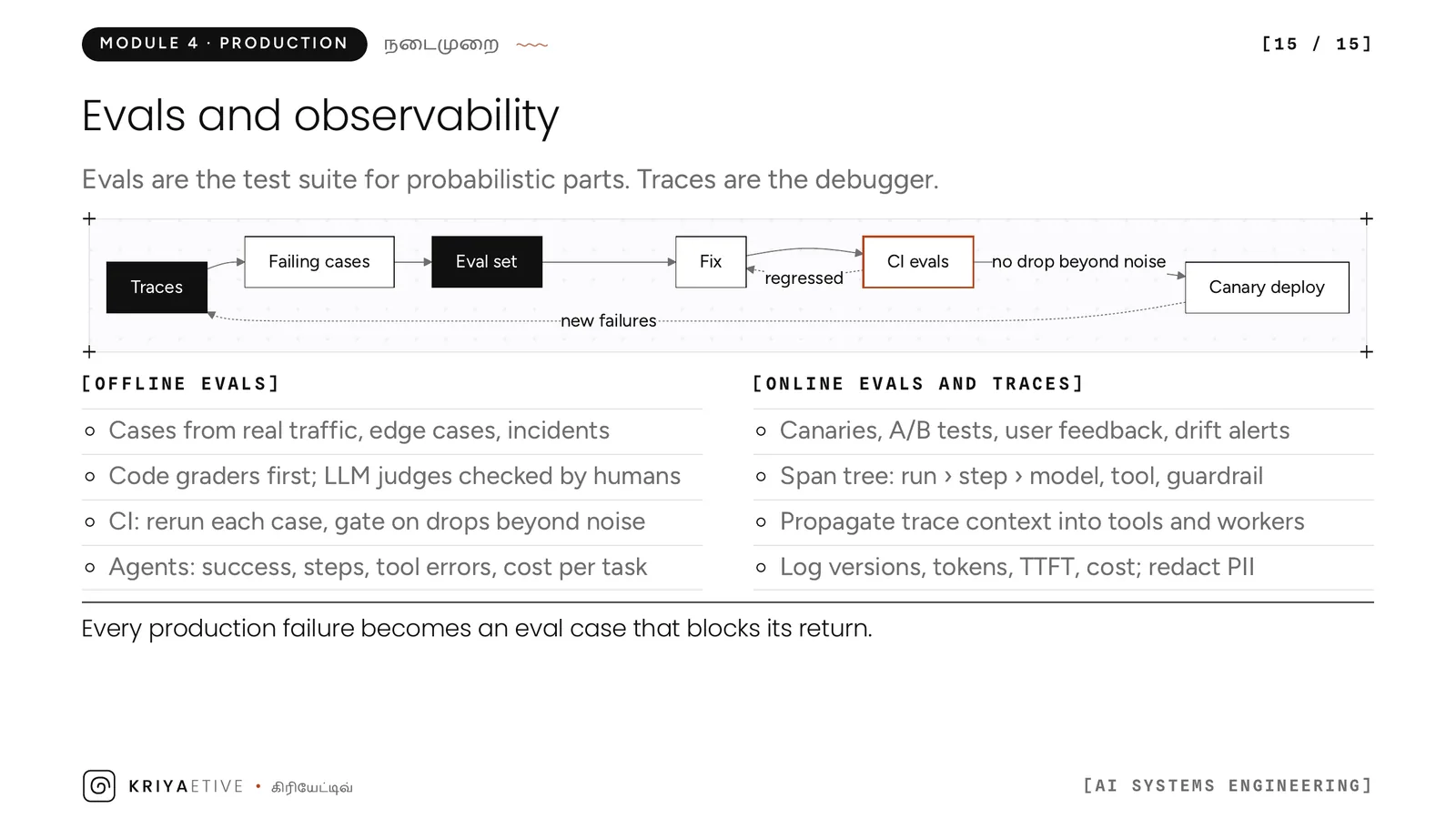
Lesson 12 Prompting, RAG or fine-tuning Prompt and eval first. Retrieve facts; fine-tune for behavior. Read Lesson 13 Guardrails and fallbacks Treat model output and tool results as untrusted: actions fail closed, answers may degrade. Read Lesson 14 Evals and observability Every production failure becomes an eval case that blocks its return. Read